Best Abs Workout at Gym: Why Cable Crunch Tops the List
Published On : 24th Dec 2025

When it comes to building strong, visible abs, many gym-goers rely only on bodyweight crunches or planks. While these exercises have their place, one movement consistently stands out as the most effective abs exercise at the gym: the cable crunch.
Simple, scalable, and highly effective, cable crunches allow you to train your abs just like any other muscle group—with resistance, control, and progression.
Let’s break down why cable crunch tops the list of abs workouts, how it works, and how to use it correctly for real results.
Why Abs Need More Than Bodyweight Exercises
Your abdominal muscles respond best to:

- Progressive overload
- Controlled spinal flexion
- Proper resistance
- Mind–muscle connection
Bodyweight exercises often become too easy over time. Cable crunches solve this problem by allowing you to add weight gradually, making them ideal for both beginners and advanced lifters.
What Is a Cable Crunch?
A cable crunch is a weighted abdominal exercise performed using a cable machine, usually in a kneeling position. The resistance comes from a cable stack, forcing your abs to contract against load throughout the movement.
Unlike fast floor crunches, cable crunches:
- Keep tension on the abs the entire time
- Minimize momentum
- Allow precise control of form and resistance
Top Reasons Cable Crunch Is the Best Abs Workout at the Gym
- Allows Progressive Overload: Just like squats or bench presses, abs grow stronger with resistance. Cable crunches let you:
- Increase weight gradually
- Adjust reps and sets
- Track progress easily
This makes them far superior to endless bodyweight crunches.
- Targets the Rectus Abdominis Directly: Cable crunches primarily activate the rectus abdominis, the muscle responsible for the “six-pack” look.
With proper form, they also engage:
- Deep core muscles
- Hip stabilizers
- Obliques (to a lesser degree)
- Constant Tension = Better Muscle Activation: The cable provides resistance from start to finish, meaning:
- No resting at the top or bottom
- More muscle fiber recruitment
- Better strength and hypertrophy gains
- Scalable for All Fitness Levels: Whether you’re a beginner or an advanced lifter:
- Beginners can start with light weight and higher reps
- Advanced users can lift heavy with strict form
This makes cable crunches safe, adaptable, and long-term effective.
- Lower Risk of Neck & Hip Flexor Strain: Many floor crunch variations strain the neck or overuse hip flexors. Cable crunches:
- Encourage spinal flexion instead of pulling the neck
- Keep hips stable
- Reduce unnecessary strain when performed correctly
How to Do Cable Crunch Correctly (Step-by-Step)
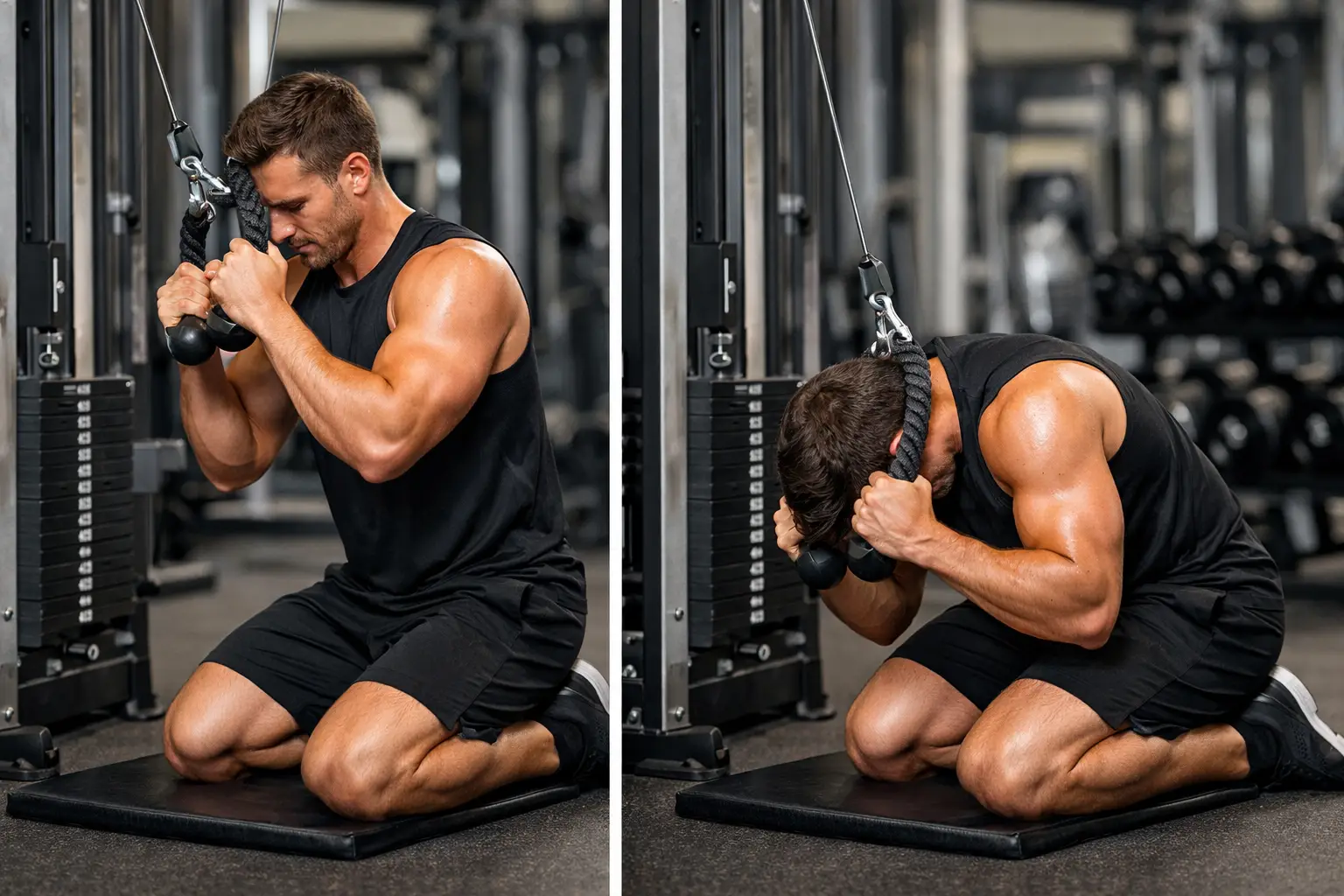
- Attach a rope handle to a high pulley.
- Kneel facing the machine and hold the rope near your temples.
- Keep your hips fixed and core tight.
- Crunch down by curling your spine, bringing elbows toward knees.
- Squeeze your abs at the bottom.
- Slowly return to the starting position.
Breathing tip:
Exhale as you crunch down, inhale as you return.
Common Cable Crunch Mistakes to Avoid
- Using too much weight and swinging
- Pulling with arms instead of abs
- Moving hips instead of curling the spine
- Rushing the reps
- Not engaging the core fully
Best Cable Crunch Sets & Reps
For most people:
- Sets: 3–4
- Reps: 12–15
- Rest: 45–60 seconds
For strength-focused training:
- 8–10 reps with heavier weight
Cable Crunch vs Other Ab Exercises
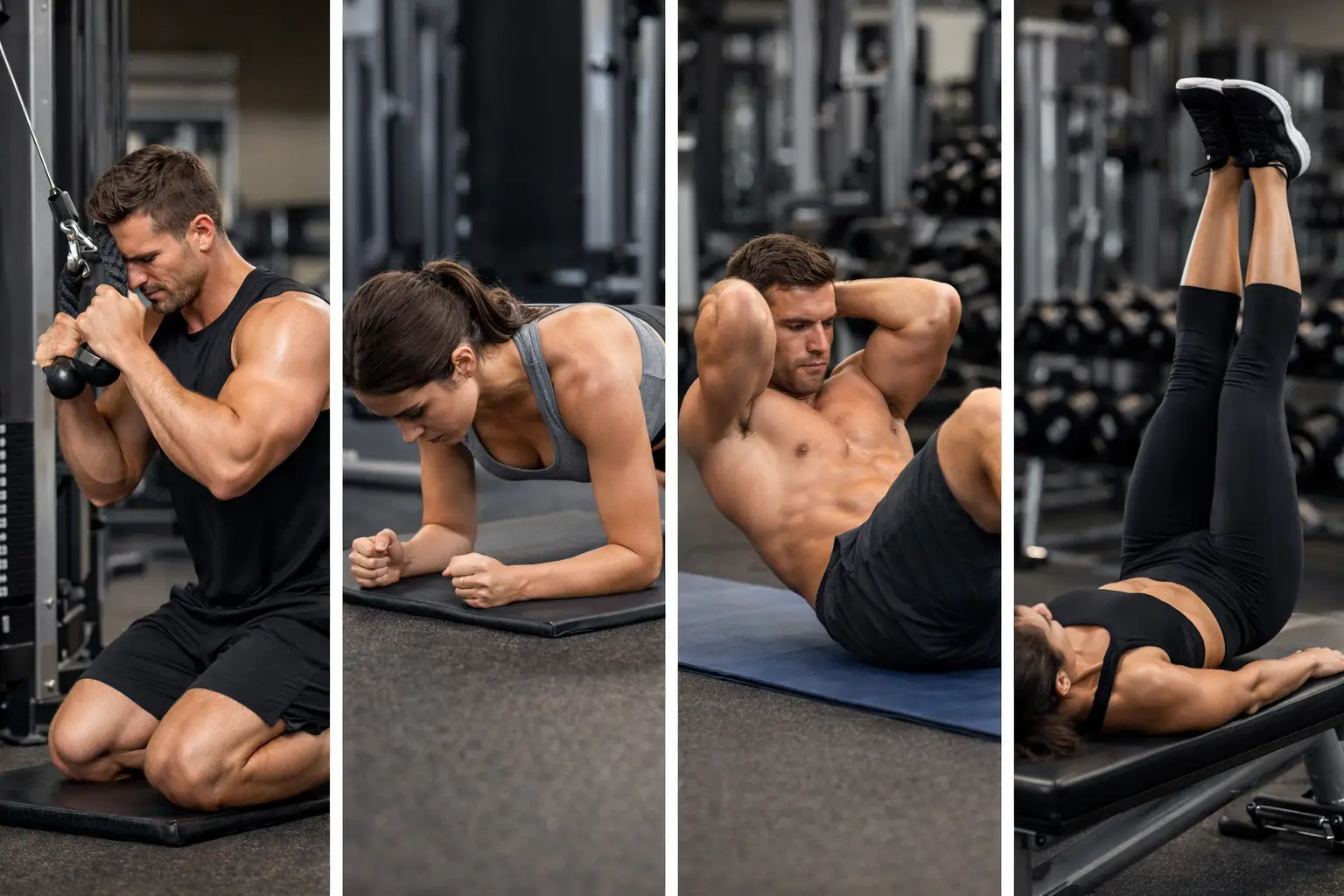
| Exercise |
Resistance |
Progression |
Core Focus |
| Cable Crunch |
High |
Excellent |
Rectus abdominis |
| Plank |
Low |
Limited |
Core stability |
| Sit-ups |
Medium |
Moderate |
Abs + hip flexors |
| Leg Raises |
Medium |
Moderate |
Lower abs |
Winner for muscle growth: Cable Crunch
Can Cable Crunch Help Reduce Belly Fat?

Cable crunches strengthen and build abs, but fat loss depends on:
- Calorie deficit
- Consistent training
- Healthy nutrition
When combined with cardio and proper diet, cable crunches help create a tight, defined core as fat levels drop.
Sample Gym Abs Workout Featuring Cable Crunch
- Cable Crunch – 4 × 12
- Hanging Leg Raises – 3 × 10
- Russian Twists (weighted) – 3 × 16
- Plank Hold – 2 × 45 seconds
Conclusion
If you’re serious about building strong, visible abs, cable crunch deserves the top spot in your gym ab routine. It delivers resistance, control, safety, and progression—everything your abs need to grow.
Stop doing endless crunches on the floor.
Train your abs like real muscles, and let cable crunch lead the way.
Frequently Asked Questions
Yes. Cable crunches are beginner-friendly when done with light weight and proper form. Start slow, focus on controlled movement, and increase resistance gradually.
Choose a weight that allows 12–15 controlled reps while feeling strong ab contraction without swinging or using momentum.
Cable crunches mainly target the upper and middle abs, but they also engage the entire core. For lower abs, combine them with leg raises or reverse crunches.
You can train abs 2–4 times per week, depending on recovery. Abs are muscles too and need rest to grow stronger.
When done correctly, cable crunches are safe. Avoid excessive weight, keep hips stable, and focus on spinal flexion—not pulling with arms.
Cable crunches are better for abs muscle growth, while planks are better for core stability. Both can be included in a balanced workout routine.
They help build strong, defined abs, but visible six-pack abs depend on low body fat levels, nutrition, and overall training consistency.
Cable crunches are best performed toward the end of your workout or during a dedicated core session to avoid fatigue affecting compound lifts.