Paneer or Tofu for PCOS Weight Loss? A Nutritionist’s Simple Breakdown
Published On : 08th Dec 2025
PCOS (Polycystic Ovary Syndrome) affects millions of women and often makes weight loss feel extremely challenging. Hormonal imbalance, insulin resistance, cravings, inflammation, and slow metabolism all make fat loss harder than usual.
One highly effective—but underrated—strategy is choosing the right protein sources. For vegetarians especially, the most commonly used proteins are paneer and tofu. Both are nutritious, but they work very differently in the body.
Here’s a detailed nutritionist-style breakdown to help you make the right choice for PCOS weight loss.
Why Protein Matters in PCOS
Women with PCOS often struggle with unstable blood sugar levels, hunger spikes, and slower fat burning.
Eating more protein helps to:
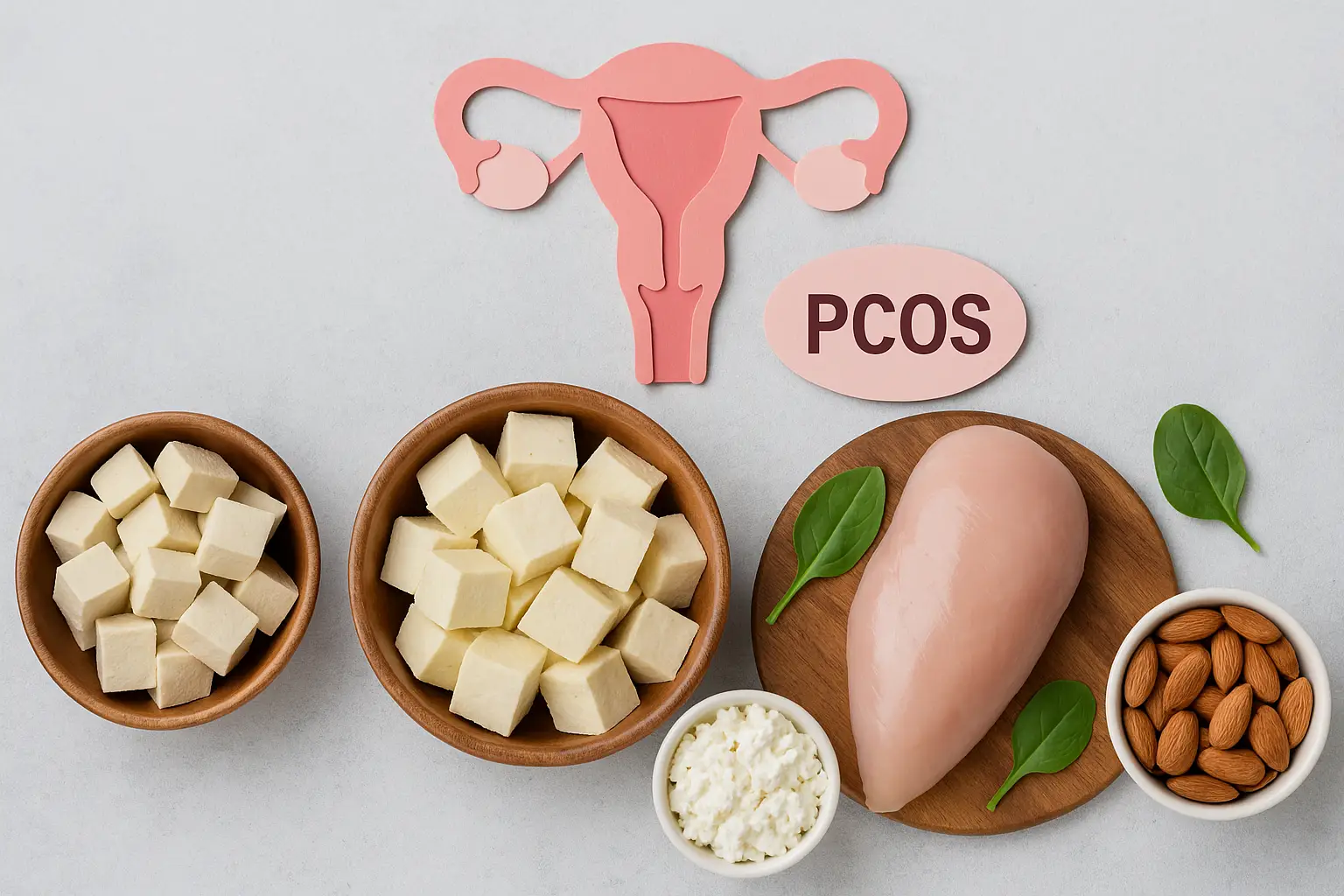
- Reduce post-meal blood sugar spikes
- Keep insulin levels stable (very important for PCOS)
- Reduce cravings and late-night hunger
- Increase satiety and prevent overeating
- Support metabolism and fat burning
- Improve body composition and maintain muscle
- Reduce inflammation
- Improve hormonal balance
This is why paneer and tofu are both considered excellent PCOS foods. But one is more suitable for weight loss, while the other supports strength and muscle gain.
Paneer for PCOS: Benefits & Drawbacks
Paneer is a nutrient-rich dairy product popular in Indian meals. It provides an excellent mix of protein and fat, both of which are essential for women with PCOS.
Benefits of Paneer for PCOS Weight Loss:
- High in Protein: Paneer contains 18g of protein per 100g, making it one of the most powerful vegetarian protein sources.
Higher protein =
- better satiety
- fewer cravings
- stable insulin levels
For women whose PCOS symptoms worsen due to frequent hunger or sugar cravings, paneer can be a stabilizing food.
- Provides Healthy Fats: Paneer contains healthy saturated fats that slow down digestion.
This results in:
- Steady release of energy
- Lower blood sugar spikes
- Reduced insulin load
Since insulin resistance is a major challenge in PCOS, foods that stabilize blood sugar (like paneer) are extremely helpful.
- Supports Hormonal Balance: Paneer provides:
- Calcium
- Vitamin D (if fortified)
- Healthy fats
These nutrients support hormone production, bone health, and menstrual regularity.
- Helps Build Lean Muscle: Many PCOS women struggle with stubborn belly fat.
Strength training + protein-rich foods = faster fat loss
Paneer supports muscle repair and growth, making it beneficial for women who exercise.
Drawbacks of Paneer:
- High in Calories: At 265 calories per 100g, paneer is calorie-dense.
Large portions can instantly exceed your daily calorie needs, slowing fat loss.
- Higher in Saturated Fat: Paneer contains around 20g fat per 100g, much of it saturated.
While small amounts are healthy, excess can:
- Increase cholesterol
- Make weight loss slower
- Cause heaviness after meals
- May Cause Bloating: Many PCOS women struggle with lactose intolerance or dairy sensitivity.
Paneer can trigger:
- Bloating
- Gas
- Acne (for some)
- Water retention
Best for:
Women who want slow-digesting protein, long-lasting fullness, and muscle support— as long as portion control is maintained.
Tofu for PCOS: Benefits & Drawbacks
Tofu is a soy-based, plant protein that is gaining huge popularity among women with PCOS for its low-calorie, hormone-balancing properties.
Benefits of Tofu for PCOS Weight Loss:
- Very Low in Calories: Tofu contains only 76 calories per 100g.
This means you can eat more volume while still staying in a calorie deficit—ideal for fat loss.
- Low Fat & Clean Protein: Tofu has only 4g of fat per 100g, making it incredibly light and easy on digestion.
It helps reduce total daily calorie intake without making meals feel restrictive.
- Contains Phytoestrogens: Soy contains natural plant estrogens that are not harmful; instead, they can:
- Help regulate menstrual cycles
- Improve estrogen balance
- Reduce symptoms like acne and hair fall
For many women, tofu supports hormone stability better than dairy.
- Easy to Digest: Tofu is soft, light, and easy to digest—perfect for women who experience bloating from dairy products like paneer.
Drawbacks of Tofu:
- Lower Protein Content: Tofu has 8g protein per 100g, which is lower than paneer.
However, you can eat a larger serving because it’s low in calories.
- Mild Flavor: Tofu can taste bland if not seasoned well.
It needs marination, spices, or sauces to become flavorful.
Best for:
Women whose primary goal is weight loss, improved digestion, and hormone balance.
Paneer vs Tofu: Nutritional Comparison
| Nutrient (per 100g) |
Paneer |
Tofu |
| Calories |
265 |
76 |
| Protein |
18g |
8g |
| Carbs |
1.2g |
2g |
| Fat |
20g |
4g |
| Digestion |
Medium |
Easy |
| Satiety |
High |
Moderate |
| Best For |
Muscle gain |
Weight loss |
If your main goal is weight loss → Choose TOFU
If your main goal is muscle building → Choose PANEER
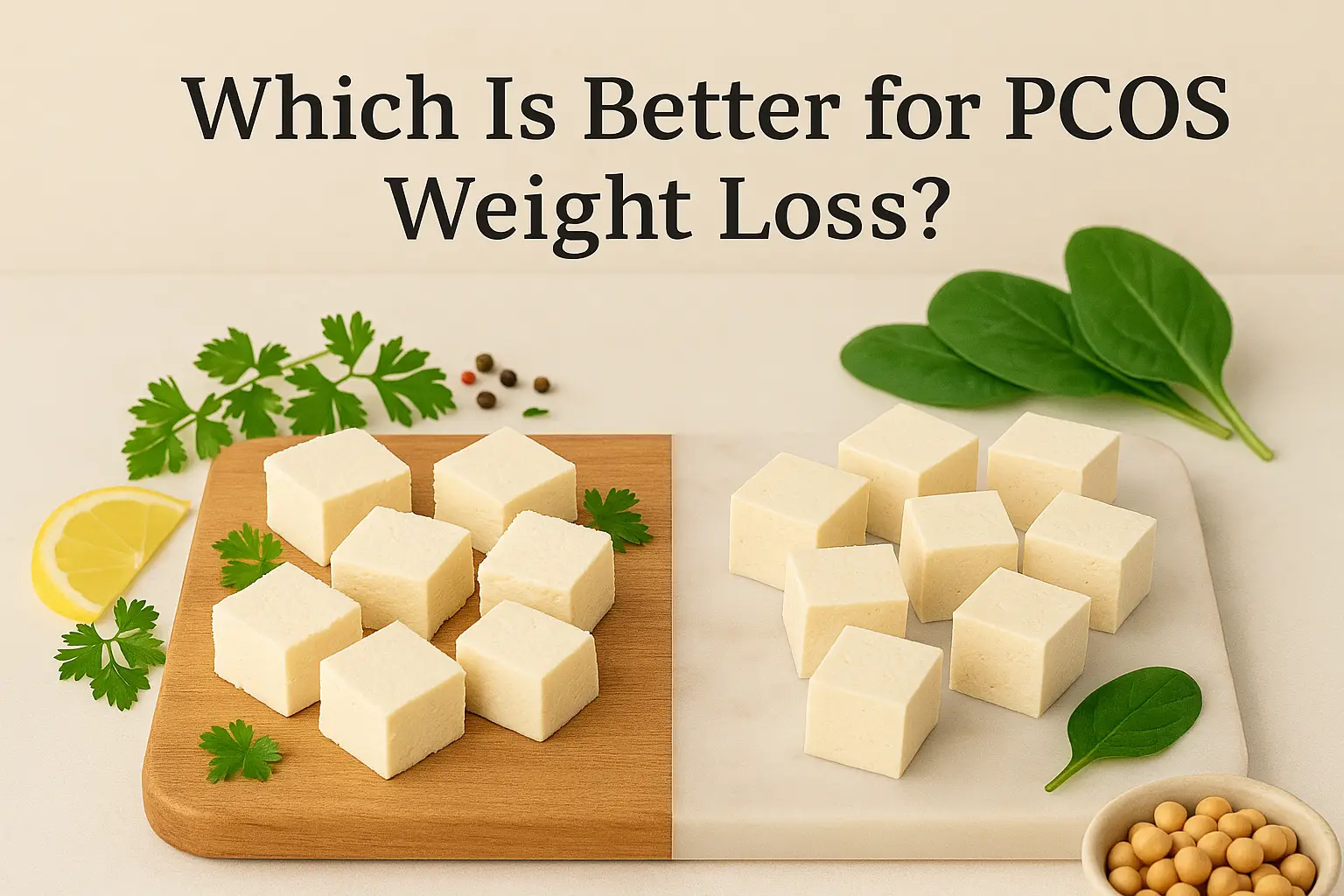
Which Is Better for PCOS Weight Loss?
Both paneer and tofu are healthy, but for pure fat loss, tofu wins clearly.
- Why tofu is better for PCOS weight loss:
- Lower calories
- Low fat
- Easy digestion
- Supports menstrual cycle
- Helps reduce bloating
- Creates a natural calorie deficit
- Keeps meals light but filling
- Paneer is still a good choice when:
- You exercise or lift weights
- You need more protein
- You want a long-lasting meal
But eating paneer daily may slow weight loss due to its calorie density.
How Much Should You Eat in a Day?
- For Weight Loss:
- Paneer: 50–80g
- Tofu: 100–150g
- For Muscle Gain:
- Paneer: 100–150g
- Tofu: 150–200g
The key is portion control for paneer and consistent intake for tofu.
Best Ways to Eat Paneer & Tofu for PCOS
- Paneer (Healthy, PCOS-Friendly):
- Grilled paneer with herbs
- Paneer tikka (air-fried)
- Paneer bhurji with vegetables
- Paneer salad with olive oil
- Tofu (Light & Weight-Loss Friendly):
- Stir-fried tofu with veggies
- Tofu scramble (like bhurji)
- Air-fried tofu cubes
- Tofu + quinoa bowl
Both are versatile and easy to add to daily meals.
Conclusion
If your goal is PCOS weight loss, choose tofu more often.
It’s lighter, easier to digest, hormone-friendly, and low in calories.
If you want muscle tone + strength, include small portions of paneer throughout the week.
The smartest approach is to combine both:
- Tofu on low-calorie days
- Paneer on workout days
This gives the best fat loss + muscle maintenance results for PCOS.
Frequently Asked Questions
Yes, paneer is good for PCOS because it is high in protein and keeps you full for longer. However, it is also calorie-dense and high in fat, so it should be eaten in controlled portions (50–80g) if your goal is weight loss.
Yes. Tofu is lighter, lower in calories, and easier to digest, making it more effective for PCOS weight loss. You can eat 100–150g of tofu without exceeding your calorie limit.
You can, but in small portions. Eating paneer daily is fine if you keep it between 50–80g and choose grilled, air-fried, or sautéed options. Avoid heavy curries or fried paneer dishes.
Yes. Tofu contains phytoestrogens, which may help balance estrogen levels, regulate periods, and reduce symptoms like acne and mood swings for many women with PCOS.
Tofu digests easier because it is lighter and plant-based. Paneer is heavier and may cause bloating for women who are sensitive to dairy.
No. The phytoestrogens in tofu are very mild and safe. They help balance hormones—not increase them excessively. Research shows tofu does not worsen PCOS.
Paneer is better for muscle gain because it has more protein (18g vs. 8g) and healthy fats that support strength training.
Not necessarily. Many women tolerate dairy well, and paneer can be part of a healthy PCOS diet. However, if dairy causes acne, bloating, or inflammation, reducing intake may help.
Absolutely. Eating both is a smart strategy.
- Have tofu on lighter, weight-loss focused days
- Have paneer on workout days or when you need more protein
- Paneer: 2–4 times a week
- Tofu: 3–6 times a week
Rotate them based on your digestion, workouts, and hunger levels.